The Crucible of Transmutationanecdotes about the creative process

Disney's Dinosaur: My Journey

Female Iguanodon Neera from Disney's Dinosaur movie
Neera

In 1995, Walt Disney Feature Animation established a small computer character animation division with the goal of creating a proof-of-concept short film about dinosaurs. The project's purpose was to test various methods for producing a full-scale CGI feature film. I was hired as an animator for this pilot project, even though I had not yet worked professionally in computer graphics. Animation Director Eric Leighton recommended me based on our previous work together on The Nightmare Before Christmas and my personal experience teaching myself the basics of CGI in my spare time. This project marked the most transformative period of my animation career and reflected the broader changes occurring at Disney. What began as a small crew of 30 people for the test project eventually grew into a state-of-the-art digital studio of 350 artists, animators, and technical experts over the next four years. During this expansion, I became an Animation Supervisor and mentor for Disney's feature film Dinosaur!

Learning CGI the Hard Way

My first computer animated shot, 1994.

When I first experienced Jurassic Park in a movie theater in 1993, my mind was blown! The dinosaurs were incredibly realistic; ILM had created a cinematic milestone that would change visual effects forever. Uncertain about my future as a stop-motion animator and deeply inspired by what I had seen, I decided to take the challenging step into the realm of computer character animation. But how would I achieve this goal?

The Evil Within

In 2008, game company Namco Bandai decided to update and reimagine their horror-themed video game Splatterhouse (originally released in 1988) for the PlayStation and Xbox platforms. The gameplay was extremely gory, as suggested by the title, but Splatterhouse also featured compelling storytelling sequences known as cinematics or cutscenes between levels. I animated some of those sequences at Brain Zoo, the studio responsible for all the cinematics in production. Fortunately, the cinematics leaned more toward a horror movie style without the fighting and gore present in the gameplay.

Opening Act

This year (2018) marks the 30th anniversary of the creation of Pee-Wee's Playhouse Christmas Special, the opening sequence of which I had the honor of animating. It all began with an unexpected phone call from producer/director Prudence Fenton. Production was set to start in just a few days, and she was inquiring about my availability to shoot the stop-motion animation for the title sequence. Prudence also requested that I sculpt a clay fox and several other animals to animate and have ready immediately. I was more than willing, but given the unusually short notice, I could only create the clay fox puppet before the shoot. Getting right to work, I wondered what I was getting myself into; while the project presented many difficulties, my efforts paid off as they resulted in an Emmy nomination!

Dynamation's Last Stand

During the early 1990s, the animation and visual effects industries transformed rapidly from traditional techniques to the use of computer-generated imagery. One of the lost arts was "Dynamation," invented by the late, great Ray Harryhausen. Once considered the most revered method for integrating creatures into live-action movies, Dynamation is now long obsolete. Although this Harryhausen-created procedure was generally considered a magician's secret, a few other masters - such as Jim Danforth, David Allen, Randall William Cook, Jim Aupperle, Phil Tippett, and Doug Beswick - all knew and practiced the art. The procedure involves animating a realistic stop-motion puppet in front of a rear projection of live-action footage. Foreground elements are masked out on a glass sheet in front of the camera and then restored by backwinding the film and running a second pass. The result is the illusion that the animated character is in the scene and interacting with the actors in the movie.

While employed by Full Moon Entertainment in 1994–1995, I was fortunate enough to have the opportunity to animate using the Dynamation technique on five separate movies. One of these productions, Magic Island, had the distinction of being the last feature film released that utilized Harryhausen's legacy process!

Cowboys, Aliens, and Giant Scorpions

The Night Scorps animation sequences!

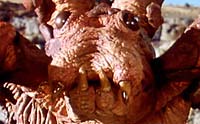
In 1994, animation legend David Allen (1944–1999) hired me to animate giant scorpions for the feature film Oblivion. The movie was a bizarre space western, the original "Cowboys and Aliens"! It was produced by Full Moon Entertainment, a busy studio with many projects in production. At the time, David was running the Full Moon visual effects department but was primarily focused on planning his dream project, the upcoming movie Primevals. He entrusted his crew to create the work for other films, such as Oblivion, under his overall supervision. I worked with Joseph Grossberg, who was responsible for the visual effects camera work and lighting. My task was to bring the giant alien scorpions, called Night Scorps, to life through stop-motion animation.

Stop-Motion Field Trip

In 1987, I was part of a group of dedicated artists hired to animate critters for the ABC weekend special Runaway Ralph. For one particularly successful sequence, director John Clark Matthews came up with the bold idea of shooting the stop-motion animation outdoors. The concept sounded crazy at first because the stop-motion process would exaggerate the changing sunlight, clouds, and wind blowing across the landscape. For "realistic" animation, filming outside should not have worked, but it did! The sequence in question involved Ralph the mouse running away from home and riding his motorcycle on the highway. Initial tests proved that if the camera shots were animated in large increments, which was necessary to follow Ralph's motorcycle, the wind and changing sunlight would be imperceptible.

Fairy Tale Surrealism

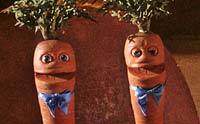
One of the most unusual projects of my career was Red Riding Hood and the Well-Fed Wolf, an educational film featuring characters representing various food groups. As Animation Director of the 1989 film, I created and brought to life talking food interacting with live actors who portrayed Red Riding Hood and the Wolf. Stop-motion animation was the primary technique used, while traditional puppetry was employed for shots involving both the actors and the talking food.

Page 1 / 2  Next >
A look behind the scenes of art-making and other musings by .

See More Articles:

Howie and pumpkin from The Nightmare Before Christmas Skellington Incident

Pillsbury doughboy baking a pie Stop-Motion Doughboy

Aliens from Encounter movie Making ENCOUNTER

mouse riding motorcycle Stop-Motion Field Trip

nimslo camera Anaglyph Technique

Frog as a knight St. Frog and the Dragon

Mother and father trolls Meet the Umblebums

Carrot characters Fairy Tale Surrealism

3 cavemen Sculpting Cavemen

A reindog and elf The Red-Nosed Reindog

Disney popsicles Making Mickey's Parade

Freddy nightmare Nightmares Made Real

tattooed lady Tattoo Parlor Diorama

face of Night Scorp Gigantic Scorpions

animator with stop-motion puppet Chroma Key Animation

bodybuilder Frank Zane posing Living Body as Sculpture

Man runs in a sewer movie set Starting at the Bottom

Animated bottle cap character Zippy the Cap

Stone Giant stop-motion puppet The End of Dynamation

Candy on a boys face Eye Candy

Dancing figures Lucid Dream

Talking deer and moose hunting trophies Wacky Trophy Heads

Handstanding figure over river valley Making THE WANDERER

Portrait of man made of fruit Creating a Fruit Man

Portrait of Jack Skellington Nightmare Still Photos

Spacecraft Wreckage Spaceship Junkyard

Closeup of a robot Models and Props pt. 1

Watch shaped like a mouse Models and Props pt. 2

Train locomotive Models and Props pt. 3

Face of a cute dinosaur Young Iguanodon

ice skating hersheys kisses Lively Kisses

shopping mall Making Mall Mania

powerful super hero Extreme Heroic Poses

The character Kait from Gears of War Motion Mixture

Clay fox sculpture in the snow Pee-Wee Christmas Title

A singing cartoon box character Lounge Singer

An animated sea lion Sea Lion Ballet

Masked monster The Evil Within

flying reptile Learning CGI in the 90s

flying reptile Disney's Dinosaur